锻造产线的安全联锁与机器人防护设计|Safety Interlocking and Robot Guarding in Forging Automation

摘要:锻压车间机器人要和压机、高温锻件同场作业,安全联锁是自动化的前提而非附录。讲区域划分、光栅与联锁逻辑、急停分级,以及人机协作时的防护边界。
Abstract: A forge robot works alongside a press and 1000-degree parts; interlocking is the precondition, not the appendix. Zone division, light curtains and interlock logic, graded emergency stop, and the guarding boundary for human-robot collaboration.
正文: 锻压车间上自动化,安全是第一个要谈的,不是最后一个补的。机器人、压机、高温锻件挤在同一个空间,联锁没设计好,省下的人工成本还不够赔一次事故。
Main text: On a forge line, safety is the first thing to discuss, not the last to bolt on. Robot, press and 1000-degree parts share one space; get the interlocks wrong and the labour saved will not cover one accident.
一、先把区域划清楚
1. Divide the zones first
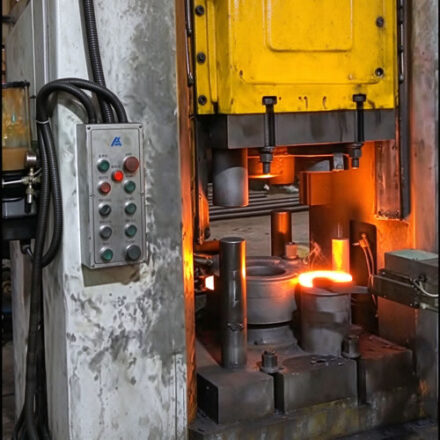
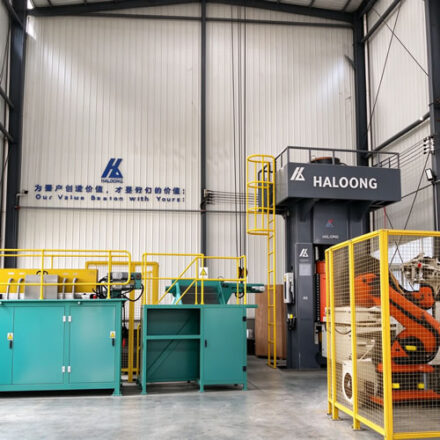
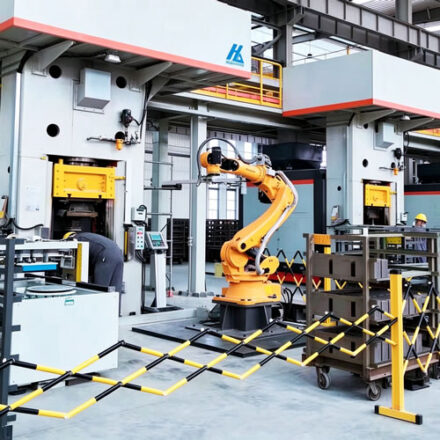
按风险把产线分成机器人作业区、人工介入区、设备危险区。危险区用固定护栏硬隔离,机器人和人共享的地带用可进入式防护加授权联锁,进去了机器人必须降速或停。
Split the line by risk into robot zone, manual-intervention zone and machine-danger zone. Hard-fence the danger zone; where robot and human share space, use access guarding with authorised interlocks so entry forces the robot to slow or stop.
二、光栅与联锁逻辑
2. Light curtains and interlock logic
人工口装安全光栅或门锁,开门即触发降速或停机;压机与机器人之间做互锁,压机下行时机器人不能进模区。联锁逻辑要在 PLC 里写死优先级,不能靠操作员默契。
Fit safety light curtains or door locks at manual openings — opening triggers slow-down or stop. Interlock the press and robot so the robot cannot enter the die zone while the press is closing. Code the priority into the PLC; never rely on operator habit.
三、急停要分级
3. Graded emergency stop
分设备急停、区域急停、整线急停三级,对应不同危险范围。区域急停只停本区不波及其他,整线急停用于严重险情。复位必须现场确认,不能远程一键恢复。
Use three levels — device, zone and whole-line stop — for different hazard ranges. A zone stop halts only that zone; the line stop is for serious danger. Reset must be confirmed on site, never a remote one-click recovery.
- 危险区硬隔离,共享区靠授权联锁降速或停机。
Hard-isolate danger zones; shared zones rely on authorised interlocks to slow or stop. - 压机与机器人互锁写进 PLC,不靠人默契。
Press-robot interlock lives in the PLC, not in operator habit. - 急停分级、复位现场确认,是底线不是选项。
Graded stop and on-site reset are the baseline, not options.
安全联锁设计完,要拿真实工况做联锁测试,而不是只跑通示教程序。自动化能不能长期跑,看的是联锁在异常时靠不靠得住,不是看它顺的时候多快。
After designing the interlocks, test them against real conditions, not just a taught program. Whether automation runs long-term depends on the interlocks holding under fault, not on how fast it runs when happy.