Why cantilever beams crack in roller kilns
碳化硅悬臂梁辊道窑悬臂承重梁窑具|Silicon Carbide Cantilever Beam
I still remember the first time I watched a cantilever beam snap inside a roller kiln. It wasn't dramatic. There was no bang, no warning. The kiln just kept running, and somewhere down the line a shelf plate tilted, products shifted, and we ended up pulling a whole load that should never have left the tunnel. That day taught me something I've repeated to every new engineer on my team since: a cantilever beam is not just a part. It's the part.
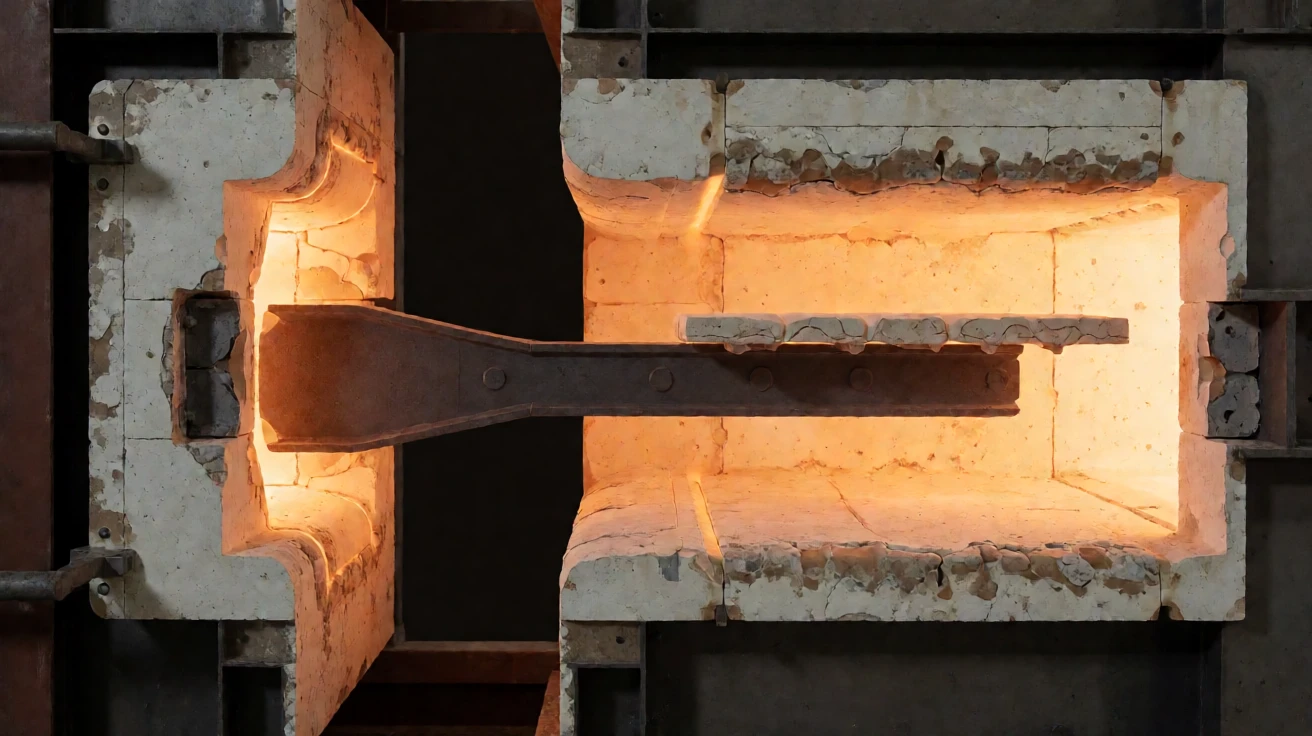
Here's how it actually works. A cantilever beam in a roller kiln is fixed at one end and hangs free at the other. That free end carries the shelf plates and whatever product sits on them. All that weight turns into bending stress, and the kiln turns up the heat on top of it. So the beam has to hold its bending strength at temperature, not just at room temperature. That's the whole game.
Now here's the trap I fell into early on. I assumed that if two beams were both silicon carbide, they were basically the same. They are not. Same material grade, different manufacturing process, very different behavior. Reaction-bonded and recrystallized silicon carbide look similar on paper and behave nothing alike in service. Mix them up during selection and you get exactly what I saw that day: fracture at high temperature and a production shutdown you didn't plan for.
So what do I actually do now when I'm choosing or replacing a beam? I confirm the manufacturing process first, before anything else. For heavy loads at high temperature, I lean toward recrystallized silicon carbide. It's not about brand loyalty. It's about matching the process to the duty.
Then there's installation, which is where I've seen people undo good material choices. The designed cantilever extension length exists for a reason. I've watched crews lengthen a beam on site to fit a layout, and I've watched those same beams fail. Don't do it. And please, don't knock a beam into place with a hammer. A tiny chip or crack that seems harmless at room temperature becomes the starting point for a fracture once the kiln hits temperature. I've learned to treat every beam like it's already under load, because soon it will be.
My takeaway after years of this is simple. A silicon carbide cantilever beam is a critical force-bearing component, and it needs control on two fronts at once: the material process and the installation dimension. Get the process right and ignore the dimensions, and you'll still crack. Get the dimensions right with the wrong process, and you'll crack too. Both, or neither.
If you're dealing with a beam that keeps failing, start by asking two questions. What process made this beam, and who changed the extension length? More often than not, the answer is sitting right there.
参与讨论
暂无评论,快来发表你的观点吧!