Reaction-bonded vs recrystallized SiC beams
碳化硅悬臂梁辊道窑悬臂承重梁窑具|Silicon Carbide Cantilever Beam
I still remember the first time I watched a cantilever beam snap in a roller kiln. It wasn't dramatic — no sparks, no warning. The beam just sagged, the shelf plates tilted, and the whole production line had to stop. What stuck with me was that the beam had looked perfectly fine before it failed. Same material grade as the one next to it, same color, same heft. The difference was invisible.
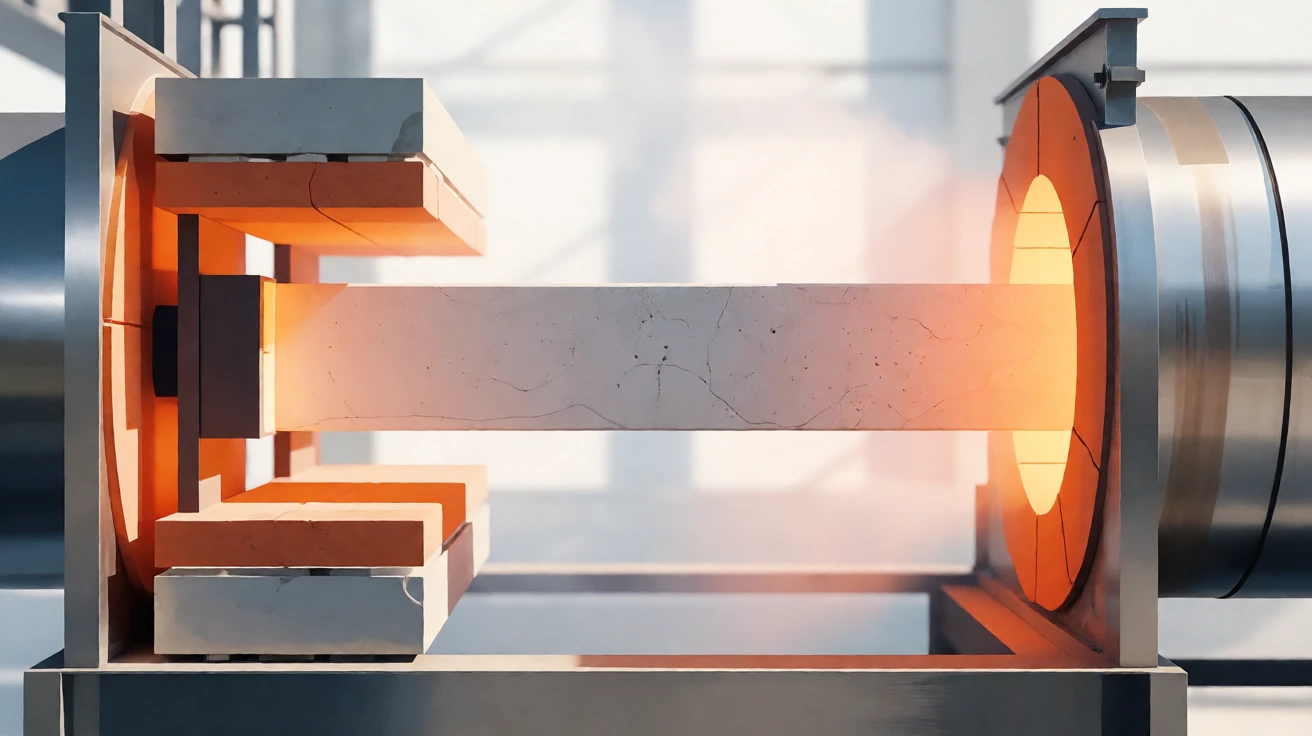
That difference is the manufacturing process, and it's the single most important thing to understand about silicon carbide cantilever beams. In a roller kiln, the cantilever beam is a load-bearing part with one end fixed and the other hanging free. It carries the shelf plates and the products sitting on them, which means it has to hold serious bending strength at high temperature. When you're choosing one, "silicon carbide" isn't a spec — it's a category.
The two processes that get confused most often are reaction-bonded and recrystallized SiC. They can share the same material grade on paper, but they behave very differently in service. This is exactly the trap: someone orders based on material grade alone, assumes the beams are interchangeable, and ends up with a fracture at temperature and an unplanned shutdown. I've seen this described as a recurring industry problem, and once you've lived through one shutdown, you start asking about process before you ask about price.
Here's the rule of thumb I've come to trust: for cantilever service, confirm the manufacturing process first. For heavy loads at high temperature, recrystallized SiC is the preferred choice. That's not a knock on reaction-bonded material in general — it's about matching the process to the actual duty. A cantilever beam is a worst-case geometry. It's fixed at one end and unsupported at the other, so every bit of load becomes bending stress, and heat only makes that harder on the material.
The part people underestimate is installation. I used to think a beam was a beam once it was in place. Then I learned that tiny damage during handling becomes the starting point for a fracture under high temperature. That's why forced knocking during installation is such a bad idea — you might not see a crack, but you've given the beam a place to fail later. It's the kind of thing that looks harmless in the moment and shows up weeks later as a broken part and a stopped line.
Dimensions matter just as much. The designed cantilever extension length exists for a reason, and lengthening it on-site to fit a quick fix throws off the whole load calculation. I get the temptation — you're under pressure, the drawing doesn't quite match what's in front of you, and a little extra reach would solve the problem right now. But that extra reach is exactly what the beam wasn't built to handle.
So if I were handing this off to someone buying or installing SiC cantilever beams, I'd say: treat the material process and the installation dimensions as two separate things that both need to be controlled. Ask which process you're getting before you compare anything else. Follow the drawing for extension length, no matter how inconvenient it is in the moment. And handle the beams like they're fragile, because at temperature, they are.
The beam that failed on me looked identical to the one that held. The lesson wasn't about looks — it was about knowing what I was actually buying.
参与讨论
暂无评论,快来发表你的观点吧!