Rising demand for high-density refractory bricks in pusher kilns
A pusher kiln can look steady from the outside while its bricks are doing difficult work. The pusher plates carry a load through sustained heat, and the lining faces repeated temperature changes. That helps explain the interest in high-density refractory bricks: buyers are not just looking for material that survives heat. They need parts that keep their shape while the kiln runs.
High-density sintered mullite brick is one option for those plates and linings because it combines compactness, high-temperature strength, and low creep. Creep is the slow change in shape that can happen while a material carries weight at high temperature. Think of a shelf that gradually sags under a heavy stack: it may not fail all at once, but the bend eventually becomes a problem. In a pusher kiln, a deformed plate can interfere with operation. For a buyer, that makes dimensional stability a more useful question than whether a brick simply looks solid.
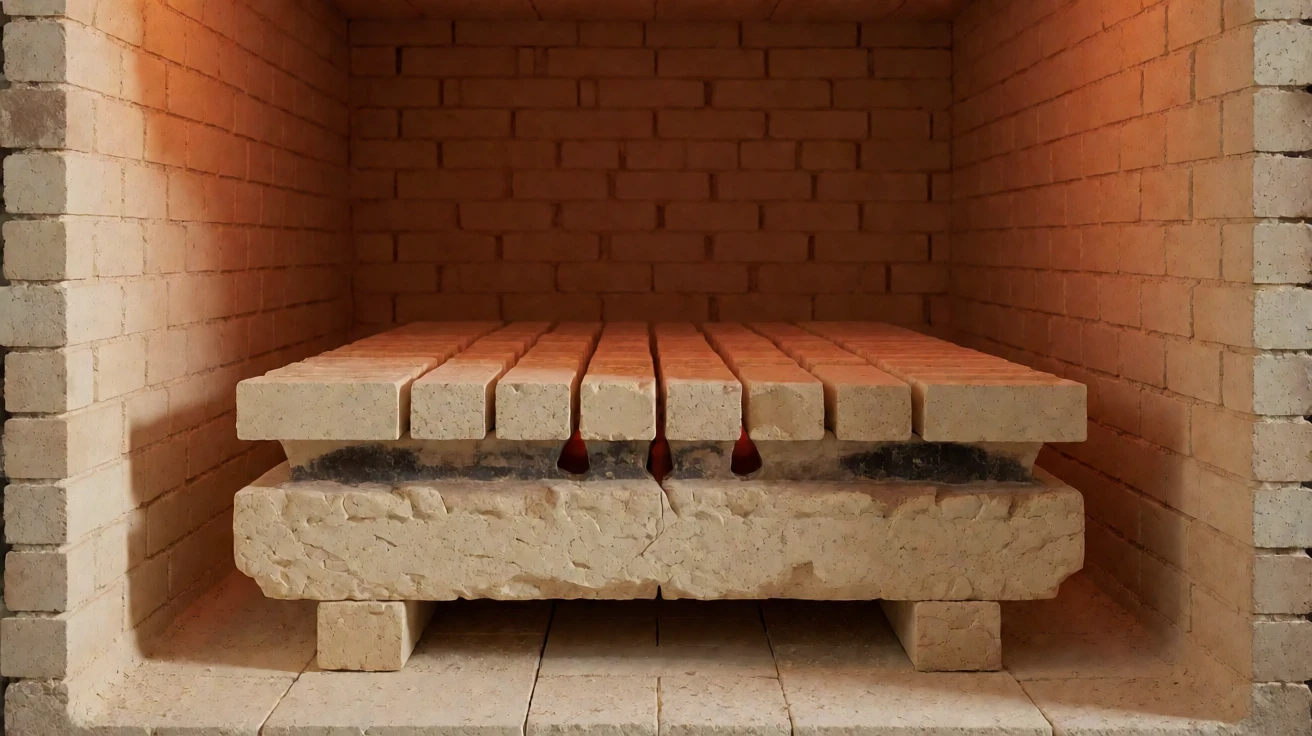
The catch is that “high density” on a sales sheet is not enough. The source material describes a risk of lower-density mullite being sold as a higher-density grade, with plates later bending under prolonged hot loads. A sensible purchasing check is to match the supplied brick to the job, especially in load-bearing areas, and verify both bulk density and creep performance during incoming inspection. The source recommends a bulk density of at least 2.60 g/cm³ for those areas. That figure is a selection guide, not a promise that density alone will prevent deformation.
Handling matters after purchase, too. Cutting pusher plates into unusual shapes may seem like an easy way to make them fit, but a cut surface can become a starting point for stress cracking. Planning dimensions before ordering can reduce that risk. The source also cautions against long-term use above 1600°C, where creep-related deformation may accelerate.
So the practical case for denser brick is less about buying the heaviest-looking product and more about avoiding a false economy. When a kiln depends on plates staying straight under load, verified density, creep performance, fit, and operating temperature all belong in the same purchasing decision.
参与讨论
暂无评论,快来发表你的观点吧!